
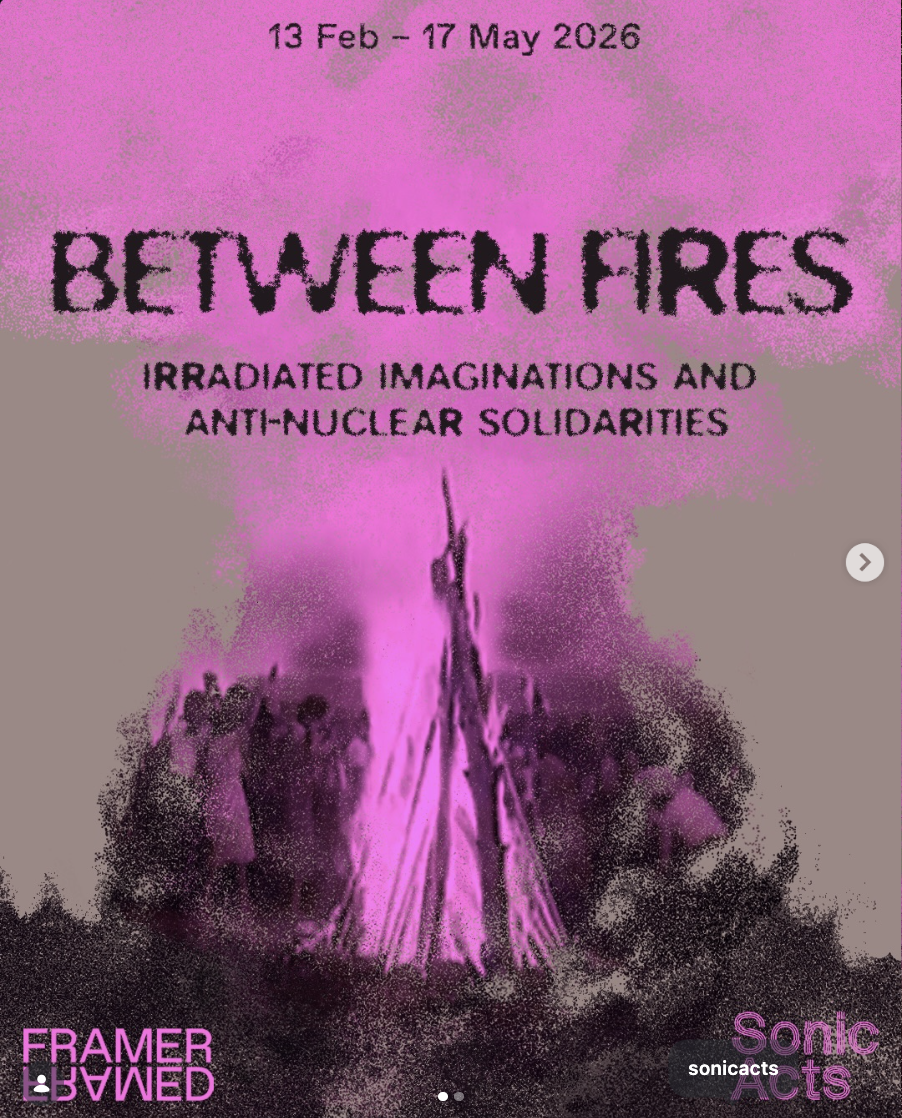

T1/2, our sound installation piece will feature within ‘𝐵𝑒𝑡𝑤𝑒𝑒𝑛 𝐹𝑖𝑟𝑒𝑠: 𝐼𝑟𝑟𝑎𝑑𝑖𝑎𝑡𝑒𝑑 𝐼𝑚𝑎𝑔𝑖𝑛𝑎𝑡𝑖𝑜𝑛𝑠 𝑎𝑛𝑑 𝐴𝑛𝑡𝑖-𝑁𝑢𝑐𝑙𝑒𝑎𝑟 𝑆𝑜𝑙𝑖𝑑𝑎𝑟𝑖𝑡𝑖𝑒𝑠’ exhibition at Framer Framed gallery in Amsterdam this spring, as part of the Sonic Acts Biennial 2026.
Curated by writer and researcher Fabienne Rachmadiev, the exhibition traces intertwined histories of nuclear infrastructures, colonialism and resistance, beginning in the Northern Kazakh steppe around Semey, where Soviet nuclear testing (1948-1991) caused lasting contamination of land, water and life. Behind the geopolitical, financial and militarised structures of the atom lie lifeworlds shaped by uranium mining, weapons testing and nuclear waste. Radiation’s invisibility – compounded by obscured nuclear infrastructures – produces a double erasure that complicates solidarity between affected communities.
The Nevada-Semey anti-nuclear movement countered this erasure by uniting communities in Kazakhstan and the US, contributing to the end of Soviet nuclear testing in 1989. In a powerful gesture, hundreds walked between two pillars of fire – an ancient purification ritual harnessed to repair radiation’s damage to the steppe.
The exhibition renews this transnational legacy through poetic, visual and sonic practices. Works by buulbuul, Demian DinéYazhi’, Inas Halabi, Äsel Kadyrkhanova, Dilyara Kaipova, Almagul Menlibayeva, Kamila Narysheva & Vicky Clarke, Roger Peet, and Emilija Škarnulytė, alongside research contributions by Kamila Smagulova and IISG, trace the spatial and temporal dimensions of nuclear colonialism across geographies.
 VICKY CLARKE