
T1/2 is a sound art project exploring the acoustic memory of the Semipalatinsk Test Site, Kazakstan. It is a collaboration with curator and artist Kamila Narysheva and myself, brought together through the British Council creative producers scheme. Also known as the Polygon, Semipalatinsk was the primary nuclear test site for the Soviet Union, subject to around 450 nuclear tests between 1949 and 1989. The project centres on how sound can capture and convey the intangible echoes of historical trauma both human and ecological. The work was presented as a sound installation at 101 Dump Gallery, Almaty in May 2025.
Collaborating online from Sept 2024 to May 2025, we developed our approach for the piece exploring the shared themes of deep time, technological materiality and transmutation. The process began with an expedition to the Semipalatinsk Test Site in December 2024, where Kamila captured field recordings of soil, water, air, and architectural remnants made using hydrophones, geophones, and contact microphones.

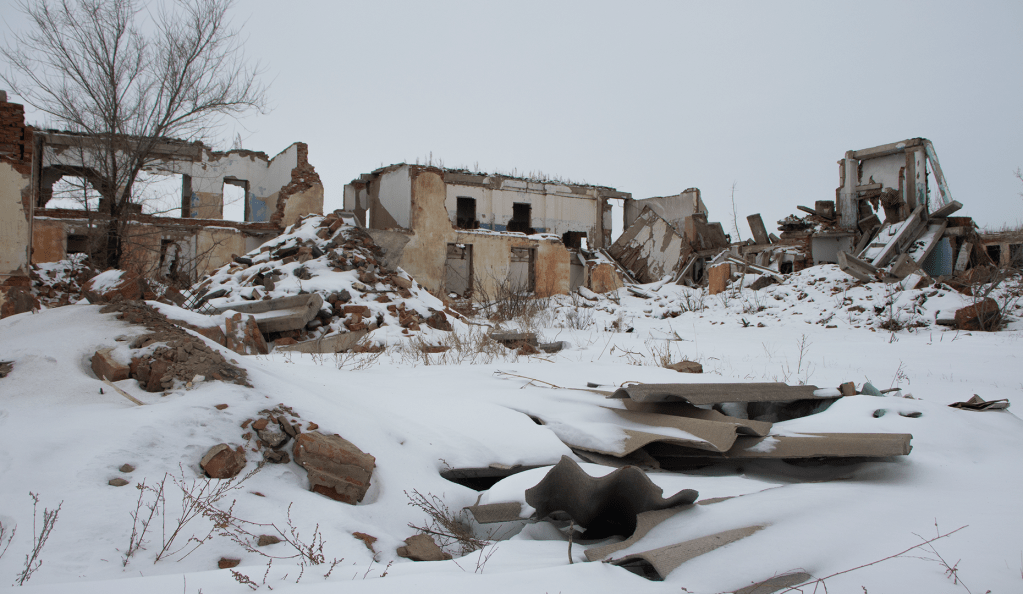
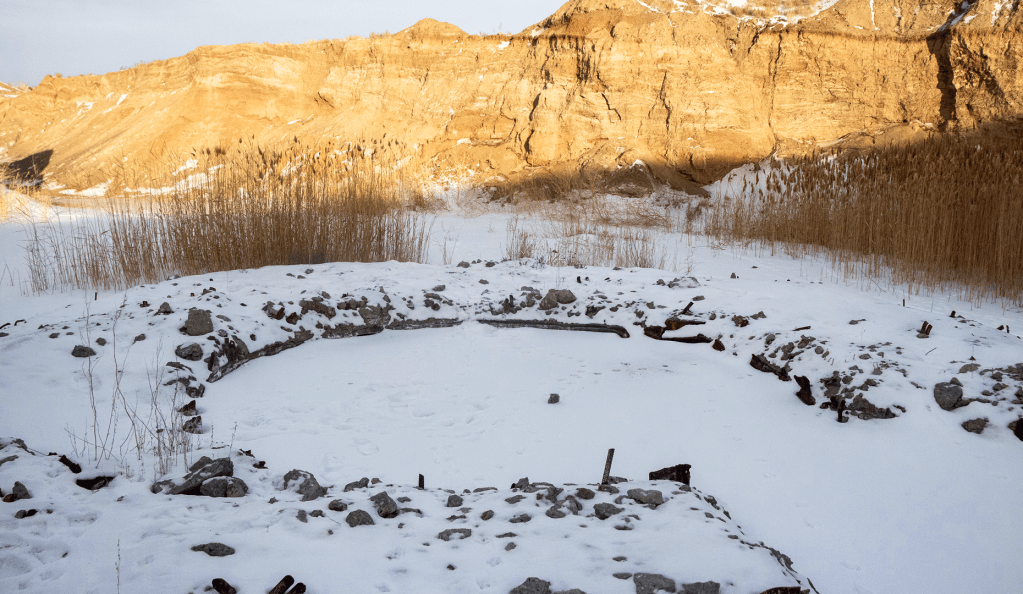
Captured at different levels of strata, key sites for recording included the atomic lake, the abandoned city of Shagan, subterranean bunkers and the environmental wind on the steppe. This created a vast corpus of sound material from which to work and form the narrative for the piece. The recordings included expansive environmental vistas of the sound such as the wind and animal sounds on the steppe – others were industrial, claustrophobic and tense. Despite the prevailing historical narratives of decay and destruction, the sound material offered hope and signs of nature regenerating itself. The personal connection of Kamila to the site (her father is from Semey) came through the material, with focused listening and engagement with the site through sound.
“And within that stillness, there’s a kind of quiet resilience. Grasses push through. Birds nest in old impact sites, horses graze along the road. The land hasn’t forgotten, but it’s learning to hold both damage and recovery at once.” Kamila Narysheva

PROCESS
We developed an T1/2 patch in MaxMSP to deconstruct the recorded material, algorithm that could decay sound material itself, so we developed a Half Life Max MSP patch that deconstructed recorded samples from the Polygon and used these within our piece. A key reference point was Togzhan Kassenova’s Atomic Steppe book, which lists the half lives of the radionuclides found on the Steppe, these include Carbon, Tritium, Strontium. From here we mapped and translated these (often very long) time intervals into more musical temporalities (i.e. number of seconds rather than years) that would take a sample at full fidelity and move to total degradation through an exponential curve.

THE INSTALLATION & PUBLIC PROGRAMME
T1/2 was premiered in the basement gallery of 101 Dump, a former Soviet building in Almaty earlier this year. A stereo set up with low blue light, providing a contemplative space for embodied listening. Alongside was a public programme that invited artists, researchers, and community members, especially those from Semey and nearby regions, to contribute. ASlong themes of nuclear legacy and justice
EDITORIAL AND RECEPTION
Anton Spice wrote a brilliant piece on our work on his Through Sounds substack. You can read ‘Sonic traces of a soviet nuclear test site’ with our interviews.
The 37 minute piece was broadcast in full on Refuge Worldwide, listen here

 VICKY CLARKE